
Mastering Force: An Essential Guide to Industrial Hydraulic Presses
In the modern manufacturing landscape, the hydraulic press stands as an unrivaled symbol of power and adaptability. From precision automotive components to heavy-duty metal forming, these machines leverage fluid mechanics to perform tasks that would be impossible with mechanical force alone. This guide explores the engineering behind these powerhouses and why they remain a staple for high-performance workshops.
The Engineering Principle: Fluid Power in Action
The core of every hydraulic press is based on Pascal’s Principle. This physical law dictates that pressure applied to a confined fluid is transmitted undiminished throughout the liquid.
In practical terms, by applying a modest force to a small piston, the system generates a massive force on a larger cylinder. This allows for a smooth, consistent application of pressure that can be halted or reversed at any point—a distinct advantage over the rigid cycles of mechanical flywheels.
Key Configurations for Industrial Needs
Selecting the right architecture is crucial for optimizing production flow. Depending on your specific application, different frame designs offer unique benefits:
-
H-Frame Presses: Named for their robust steel structure, these are the workhorses of the industry. They offer maximum stability for heavy-duty pressing and assembly.
-
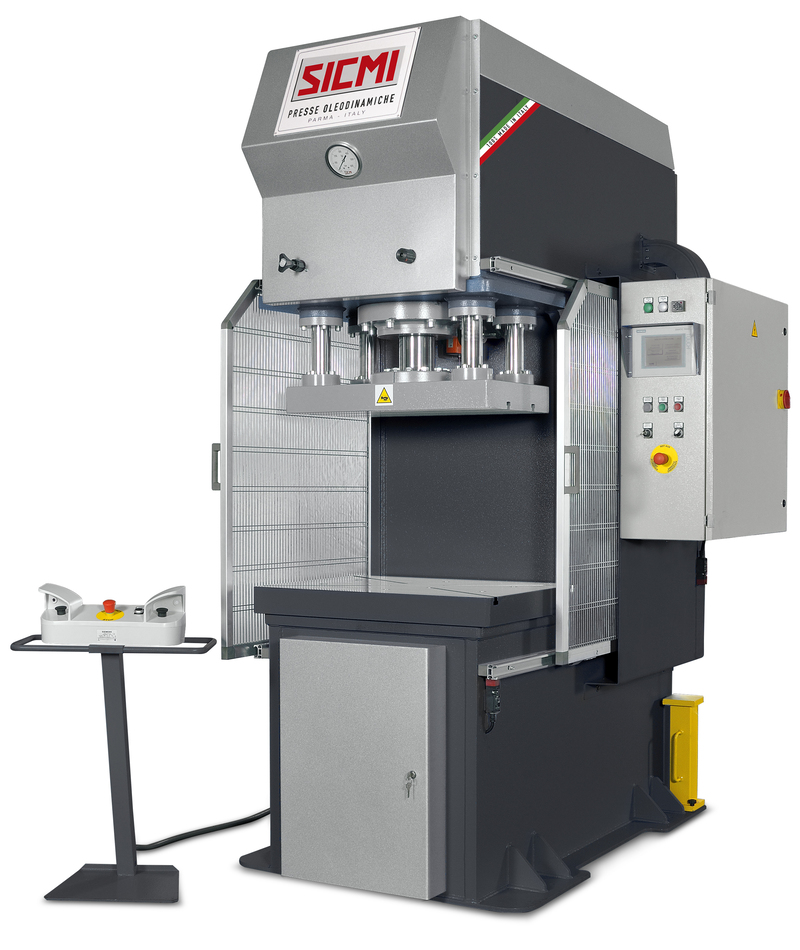
C-Frame (Gap) Presses: With an open throat design, these machines maximize floor space and provide operators with easy access to the work area from three sides.
-
Four-Column Presses: When absolute centering and uniform pressure distribution are required (such as in high-precision molding), the four-column design is the gold standard.
-
Custom Workshop Presses: Tailored solutions for straightening, bending, and maintenance tasks that require specific bed sizes or stroke lengths.
Why Choose Hydraulic Over Mechanical?
Modern manufacturing demands flexibility. Hydraulic technology offers several strategic advantages:
-
Variable Stroke and Pressure: Unlike mechanical presses, the full power of a hydraulic press can be delivered at any point in the stroke.
-
Built-in Safety: Pressure relief valves ensure the machine never exceeds its structural limits, protecting both the tool and the operator.
-
Lower Operational Costs: With fewer moving parts than complex mechanical linkages, hydraulic systems often boast lower maintenance requirements and longer lifespans.
-
Precision Control: Advanced PLC integration allows for micro-adjustments in speed and force, essential for delicate deep-drawing or composite forming.
Maximizing Longevity: Maintenance Essentials
To maintain the peak performance of your Sicmi equipment, a proactive maintenance schedule is vital. Key focus areas include:
-
Fluid Contamination Control: Regular oil filtration and analysis to prevent valve wear.
-
Seal Integrity: Inspecting rams and cylinders for leaks to ensure constant pressure.
-
System Calibration: Periodic checks of pressure gauges and safety sensors to meet international industrial standards.